Making a Smoke Damage Insurance Claim After a Fire Near Austin
 Written by Joseph Dittman, Texas public adjuster · updated
Smoke damages more homes than flames do. A kitchen fire can leave soot in every room, and a wildfire on a ridge west of Austin can push smoke and ash into neighborhoods that never see fire. A smoke damage insurance claim covers the cleaning, testing and replacement needed to make your home and belongings safe and odor-free again. It is also one of the claims insurers most often underestimate.
The challenge with a smoke damage insurance claim is that much of the damage is invisible or subtle: fine residue on surfaces, particles inside ductwork, odor trapped in insulation. This guide explains how smoke travels, what to document, when cleaning works and when replacement is necessary, and how Central Texas wildfire risk fits in.
Wildfire risk around Austin
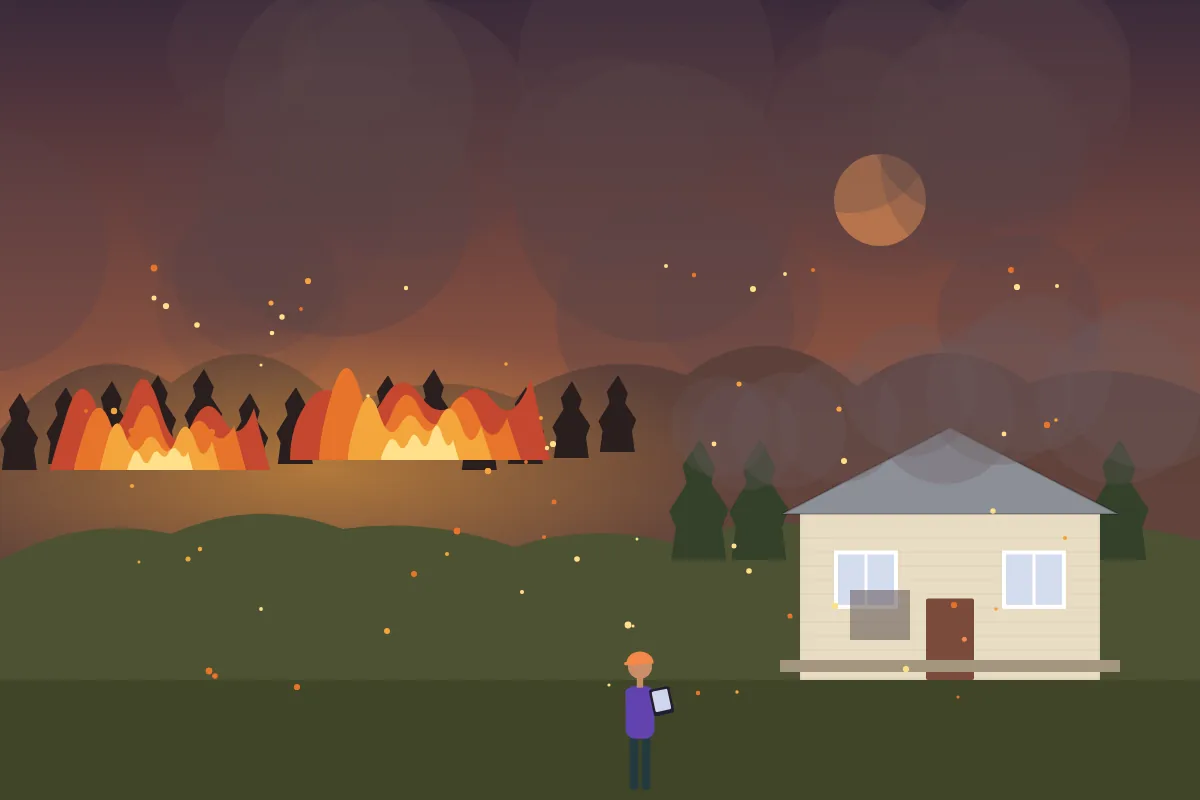
Western Travis County, eastern Hays County and parts of Williamson County sit in what fire officials call the wildland-urban interface, where homes meet cedar and oak woodland. During drought, those fuels burn intensely. The Labor Day weekend of 2011 brought the Bastrop County Complex fire east of Austin, which destroyed well over a thousand homes, and fires near Steiner Ranch and other areas west of the city. Smoke from fires like these can travel for miles.
If you live in Lakeway, Bee Cave, Dripping Springs, Westlake or the Highway 71 and 290 corridors, review your coverage before fire season.
How smoke moves through a house
Smoke follows air pressure and temperature. In a house fire, hot smoke rises and spreads through open doors, attic spaces and HVAC returns. Cooler surfaces attract residue, which is why exterior walls and closets often show staining. Wildfire smoke enters through vents, gaps, attic ventilation and the HVAC system's outside air intake. The result can be residue in places no one would think to look.
- HVAC ducts, air handlers and filters
- Attic insulation and roof decking
- Inside cabinets, drawers and closets
- Porous materials like upholstery, carpet, drapes and clothing
- Electronics with cooling fans
Documenting a smoke damage insurance claim
- Photograph visible residue, especially on light-colored surfaces, and take close-ups of window sills, light fixtures and vents.
- Save air filters from the HVAC system and note the date you changed them.
- Do wipe tests: a clean white cloth wiped across surfaces shows residue clearly in photos.
- Note odors room by room, and whether they worsen with heat or humidity.
- Consider testing: an independent industrial hygienist can sample surfaces and air for soot, ash and char particles.
Cleaning versus replacing
Insurers usually start with cleaning. Professional cleaning works well on hard, non-porous surfaces with light residue. It often fails on porous materials and in hidden areas. Insulation contaminated with smoke usually needs replacement. Ductwork may need cleaning or replacement depending on the material and contamination. Paint over smoke-stained walls needs a sealing primer, or odor will return.
If the insurer's cleaning plan does not remove odor and residue, document the result after cleaning and request further remediation. Testing after cleaning shows whether it worked.
Contents and living expenses
Contents often make up the largest part of a smoke damage insurance claim. Clothing and textiles can sometimes be cleaned; mattresses, pillows, food and some electronics usually cannot. Build a room-by-room inventory with photos. If smoke made your home unlivable, loss of use coverage pays the increased cost of living elsewhere while it is cleaned or repaired. Our fire damage public adjuster page covers contents inventories in more detail.
Exterior and outdoor damage from wildfire smoke
Smoke and ash do not only affect interiors. Wildfire ash can etch or stain exterior paint, discolor siding, coat solar panels, clog gutters and damage outdoor furniture and pool equipment. Radiant heat from nearby fires can warp vinyl siding, crack windows and melt plastic fixtures even when flames never reach the house. Walk around the exterior and photograph each elevation, the roof if it can be safely viewed, decks and outdoor kitchens. Ash in pools can damage filters and pumps. These items belong in the claim along with interior cleaning and contents.

Working with restoration companies
You choose the restoration company, not the insurer. Ask for an itemized scope before work begins, photographs before and after, and test results if testing is done. Restoration firms sometimes ask homeowners to sign a direction to pay that sends insurance money straight to them. Read it carefully, and understand what you are agreeing to before signing.
Protecting your home before fire season
Clear brush and dead vegetation near the house, keep gutters free of leaves, use ember-resistant vents where possible, and keep a current home inventory with photos or video. Check your policy for dwelling limits that match current rebuild costs, extended replacement cost endorsements, and contents coverage at replacement cost. These steps cost little and matter a lot if smoke or fire reaches your home.
Frequently asked questions
Is wildfire smoke damage covered by homeowners insurance?
Generally yes, if the smoke came from a sudden fire and caused physical damage such as residue or odor. Coverage depends on your policy's wording and on documenting the damage.
How long do I have to file a smoke damage insurance claim?
Your policy sets the notice deadline, and Texas law limits time for disputes. Report promptly, ideally before cleaning so damage can be documented.
Can I clean smoke damage myself?
Light surface cleaning is fine, but document everything first. Professional cleaning and testing are often needed for HVAC, insulation and porous materials.
Does insurance cover smoke damage from a neighbor's fire?
Usually your own homeowners policy covers smoke damage to your property, regardless of where the fire started.