Wind Damage Claim in Austin: Storms, Tree Strikes and Ice
Wind and storm claims
Central Texas does not need a hurricane to tear a roof apart. Spring squall lines, summer downbursts, the occasional tornado and the ice storm of February 2023 have all left Austin homeowners with lifted shingles, split limbs and fences on the ground. A wind damage claim in Austin succeeds when the damage is tied clearly to a storm date and every affected part of the property makes it into the estimate.
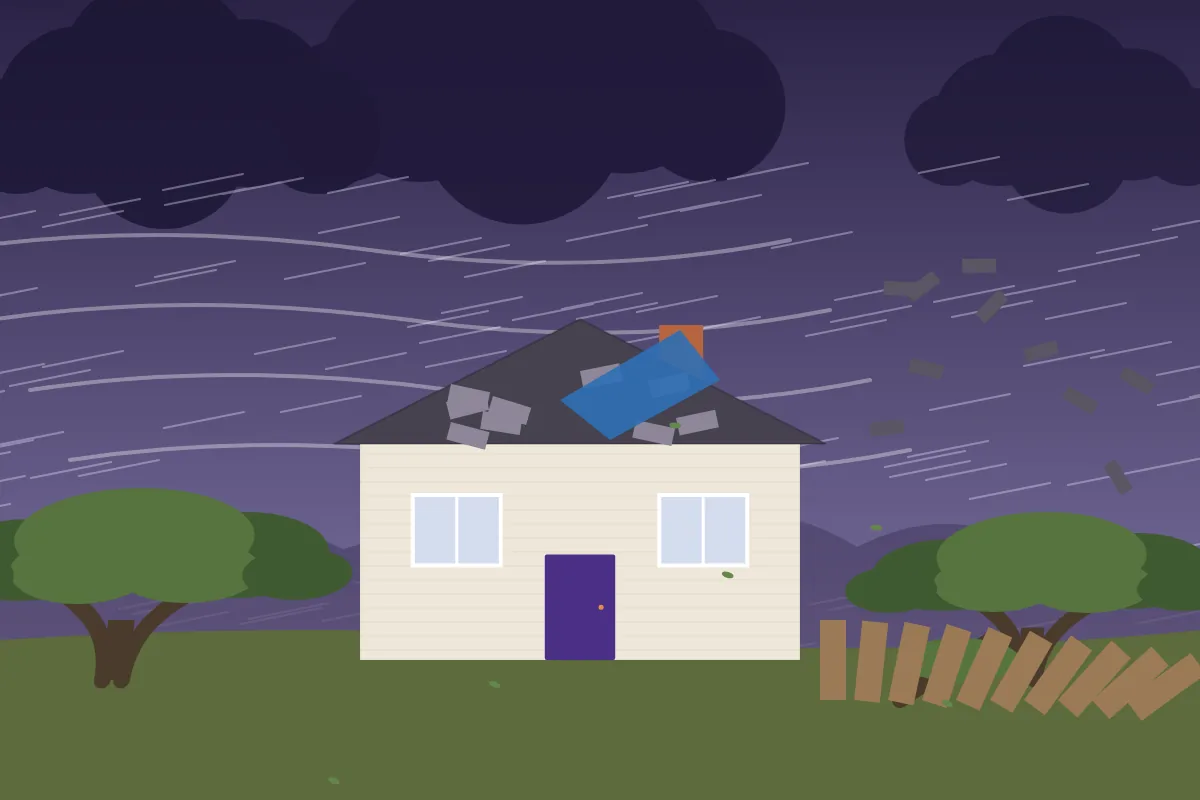
We approach each wind damage claim in Austin as a full-property survey. Wind rarely stops at the roof: it creases shingle tabs, peels ridge caps, rips soffit, pushes rain past window seals, drops limbs on gutters and flattens fences. We document each item, connect it to the storm with weather data and the damage pattern, and price it at current Central Texas labor and material costs.
How wind damage shows up on Austin roofs
Wind lifts the leading edge of a shingle, breaks the factory sealant strip and folds the tab backward. When it lies back down it can look fine from the yard, but the crease and broken seal remain, and the shingle no longer resists the next storm. We hand-check rows on each slope for unsealed and creased tabs, missing ridge and hip caps, displaced starter courses and exposed nails.
Metal roofs fail differently: panels lift at the eaves, fasteners back out and trim pulls away. Tile roofs crack where wind-borne debris hits them or where uplift breaks the fastening. Each pattern needs its own photographs.
Trees, limbs and the 2023 ice storm
Austin's tree canopy is one of the things people love most about the city, and it is also behind many of the wind and ice claims we see. When ice coated the region in early February 2023, live oaks, pecans and cedar elms shed limbs onto roofs, cars, fences and power lines across Travis and Williamson counties, and many homes were without electricity for days.
A tree-strike claim usually includes structural repair to rafters or decking, roof covering, gutters, interior ceiling and insulation damage, fencing, and tree removal. Removal coverage is often capped at a modest amount per tree and may depend on whether the tree hit a covered structure, so we read that provision closely. Our guide to ice storm tree damage claims covers the details.

Interior leaks after wind-driven rain
Most homeowners policies cover rain that enters through an opening created by a covered peril. That wording matters. If wind tore off shingles and rain then soaked the attic, the interior damage is typically part of the claim. If rain seeped through an old, worn flashing with no storm opening, the insurer may deny it. We look for the storm-created opening and photograph the path the water took into the house.
- Stained or sagging drywall ceilings and wet insulation
- Swollen baseboards and buckled wood floors below leaks
- Damaged contents in closets and attics
- Mold that developed because a leak went unnoticed
Deductibles and dates on a wind damage claim in Austin
Texas policies often carry a separate wind and hail deductible written as a percentage of the dwelling limit, which can be several thousand dollars on an Austin home. When two storms hit within weeks, the insurer may treat them as separate events with separate deductibles, or argue some damage predates the policy period. Clear dates and photographs help sort that out. If a carrier has already paid less than the repair cost, our denied and underpaid claim help explains how we reopen it.
Austin claim questions, answered
Does homeowners insurance cover a fence blown down in Austin?
Usually, under the other structures coverage, subject to your deductible. Shared fences between neighbors can be split between two policies. We document the fence along with the rest of the storm damage so the deductible is applied once.
A neighbor's tree fell on my roof. Whose policy pays?
In most cases your own homeowners policy pays for damage to your home, regardless of whose tree it was. Ownership can matter if the tree was visibly dead and the neighbor was warned, but that is a liability matter between the two insurance companies and, if needed, an attorney.
What counts as wind damage versus normal wear?
Wind damage is sudden and linked to a storm: creased or missing tabs, lifted panels, torn trim. Wear develops slowly: granule loss across all slopes, curling and cracked sealant. We photograph the difference and explain it in writing.
Should I tarp the roof before the adjuster comes?
Yes. Policies require you to protect the property from further damage, and reasonable tarping costs are generally part of the claim. Photograph the damage first, keep the invoice, and do not make permanent repairs before inspection.